Your First 100 Days as a Cruise Manager: A Survival Guide

Congratulations. You have the contract.
You've done the preparation. You're boarding for the first time as the person responsible for the guest experience.
The first hundred days of a cruise management career are formative in a way nothing else is. The habits, instincts, and reputation you build in this window follow you for years. Here's how to navigate them well.

Days 1–14: Listen More Than You Lead
Your first two weeks are not for proving yourself. They're for understanding the specific culture of this ship, this company, and this crew.
Every company has its own rhythms, priorities, and unwritten rules. The captain who expects briefings to run exactly to time. The head chef who takes creative ownership of the menu and doesn't appreciate being told how to plate things. The room steward who has a system for her section that she's refined over four seasons and would very much like to continue using.
Arriving with your own system before you understand theirs creates unnecessary friction. Arriving curious and genuinely interested in how things work here builds the trust that makes everything easier later.
Days 15–30: Establish Your Guest Rhythm
By week three, you should be finding the guest interaction patterns that work for you.
Not copying someone else's style — yours. How you move through the restaurant at breakfast. The specific questions you ask new guests to understand what they're most hoping for from the trip. The way you run a briefing.
Some of what you practised in training will shift when you're doing it live. That's normal. The goal is to identify what feels authentic and effective — and then make it consistent.

The Thing Nobody Tells You About the First Month
The loneliness.
Most new cruise managers don't talk about this. Your cabin is small. You're working long days. Your family is far away. The crew is friendly but professional relationships have their limits. You're simultaneously the most visible and the most isolated person on the ship.
I cried in my cabin in week two of my first contract. Not because anything had gone wrong. Because I missed my normal life and the person who would understand that feeling was not on the ship.
This passes. It passes faster if you allow yourself to feel it without interpreting it as failure or a sign that you've made the wrong choice. You haven't. You're adjusting to an entirely new way of living. Give yourself the three weeks it takes for this adjustment to complete.
Days 31–60: Seek Feedback Deliberately
In month two, your instincts are starting to form. This is the right moment for structured feedback — not the general 'how am I doing?' that gets general answers, but specific, targeted questions.
'What's one thing about my guest briefings that you'd change?' to your Hotel Manager. 'What do you wish the previous cruise manager had done differently?' to a long-serving crew member. 'Was there anything about this excursion that could have been better handled?' to a trusted colleague.
Specific questions get specific answers. And specific answers build specific improvement.
Days 61–100: Build Your Reference Points
By the third month, you're no longer learning the job from scratch — you're developing mastery of your version of it.
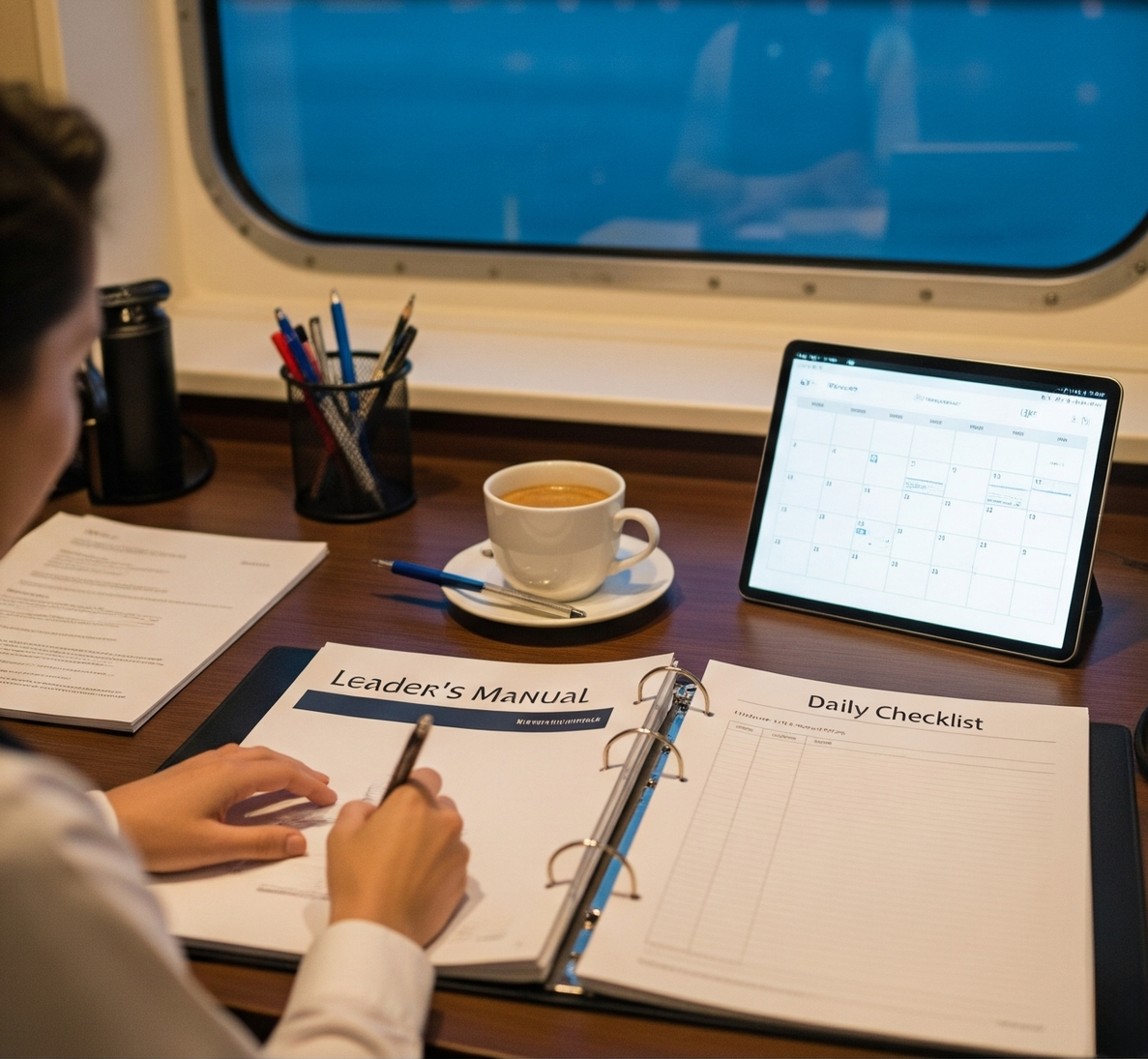
Begin documenting deliberately: what worked, what you'd refine, what guests responded to most positively, which excursion formats created the best energy.
These notes become the foundation of a professional practice that compounds season by season. The cruise manager who reaches their fifth season with four seasons of specific documentation improves at a rate that natural experience alone can't match.
The Reputation You Build Now
The river cruise industry is small and interconnected. The reputation you build in your first hundred days travels. Not through formal references — through the informal conversations between captains, hotel managers, and operations teams who talk to each other constantly.
Show up every day as someone who takes genuine pride in the guest experience. Handle the hard moments with grace. Be the person your crew knows they can count on. That reputation will open doors for the rest of your career.
One More Thing: The Bootcamp Changes Everything
If you're completing the Academy before your first contract, the bootcamp — five days aboard a river ship on the Rhine — will have already given you something no online curriculum can fully replicate: the visceral memory of what it feels like to stand at the front of a guest space and hold a room.
That memory carries. When you're nervous on day seven of your first contract, your body remembers that it has done this before. That is the specific advantage of The Diamond Route Bootcamp, running in February 2027.
Full details → CONTACT US
Places are limited by ship capacity. The waitlist fills first.
🎙️ Is this the path for you?
🎓 Ready to stop serving other people's adventures and start living your own?
Book a free 30-min 1-1 call with me directly
Or watch our free webinar
"The Career Switch That 160+ Hotel & Tour Professionals Made — And What It Actually Takes"

Maddy Căldărușe
Founder, RiverCruiseMentor.com